how to get audio from screen recording on mac
Cause you wondered how to record your screen along a Macintosh? How to screen record on a Mac with sound? Perhaps you deprivation to record tutorials for software you like, make software reviews, or put down yourself performin video games. How do you do it? There are some key things you should know earlier you option the right package to have it off.
How to screen record happening Mac with audio:
- Launch Screenflick
- Chink "Record System Sound" to capture the sound playing happening your Mac
- Click "Record Microphone" to immortalize your voice
- Click "Record Camera" to record your FaceTime camera
- Select the area of the screen (or full shield) to read
- Get down the Recording!
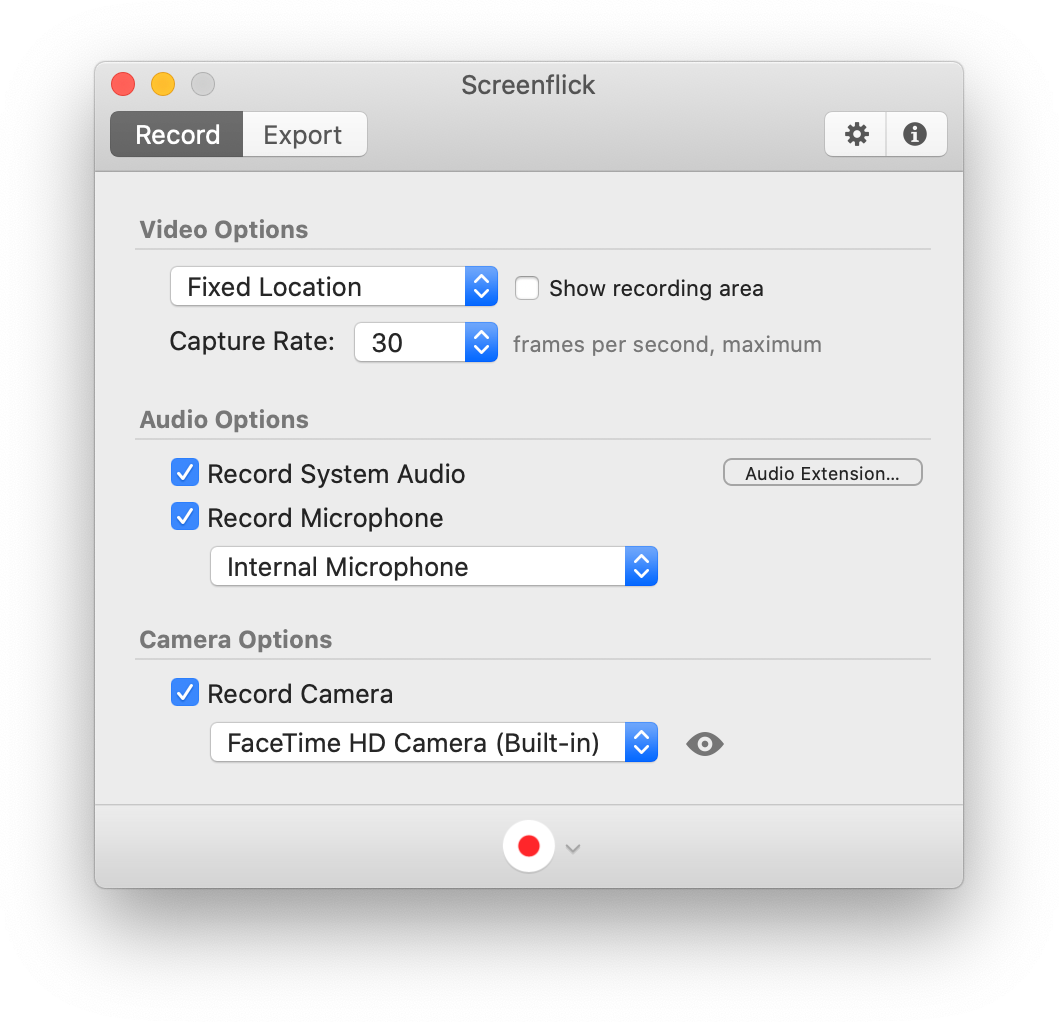
Some of the dandy features of Screenflick
- High Carrying into action Recording
- Record System of rules Sound
- Record Mike Sound
- Record Video Camera
- Fell the Mouse Cursor
- Mouse & Keyboard Display
- Tape High Resolution Screens
- Recording Scale &adenosine monophosphate; Frame Grade
- Cursor-Following Modes
- Produce Timelapses
- Double-jointed Export Options
- Pull up along Your Screen
Screenflick - A Better & Faster Mac Screen Recorder
Different QuickTime Player, Screenflick is a factual screen recording diligence for your Mack which has a riches of features to control the transcription and exportation, patc existence well-titled easy to use. With Screenflick you can record smooth high tone recordings of your Mac's screen with arrangement audio, microphone audio, and even film-in-picture from a television camera. Screenflick can optionally show mouse clicks and keyboard keypresses, add an emblem/watermark double to the transcription, and offers plenty of control over recording and exporting settings sol you give the axe use it to do on the button what you need.
Using Screenflick to Record Your Mac Screen
- Open Screenflick
- Optionally change any of the transcription settings to suit your needs
- Sink in the recording button
- Select the area of the screen to record and part transcription
- Stop the transcription when you're done
- Optionally change any of the export settings to suit your needs
- Export the recording
If you get into't need or want to change any settings, it's as simple every bit it gets to use, but because you rump customize many settings, it's often more useful and ruling. See more about how to use Screenflick.
Some of the corking features of Screenflick
- Piping Performance Transcription — Because Screenflick doesn't record directly to an H.264-encoded moving picture file, it has swell performance allowing you to record spiky resolutions at in flood frame rates, and at higher quality than H.264 movies typically allow. Record full screen games capable 60 fps.
- Record System Audio — Integral plump for for one-click system audio frequency transcription. Record the audio frequency from games and else applications.
- Record Microphone Audio — Record the built-in microphone or any other mic obstructed into your Mac.
- Record Video recording Camera — For example, record your Mac's built-in FaceTime camera to create a picture-in-mental picture overlay
- Shroud the Mouse Cursor — Assume't want the cursor shown? Hide it so it's not in the recording in the least.
- Sneak out & Keyboard Display — Facultative display of mouse clicks and keyboard keypresses with customizable styling.
- Record High Resolution Screens — Record even large Retina screens, with high frame rates, both at Retina and non-Retina scales.
- Recording Scale & Frame Rate — Customize the scale and framing rate for excess correct control over performance. (For instance, using a 720p recording scale on a 15" MacBook Pro improves performance by 80% over QuickTime Player. That way more of your calculator's major power is saved for what you're recording, instead of victimisation that power vindicatory trying to record it.)
- Cursor-Following Modes — With Screenflick, you fire choose to record a small-sized area around the cursor, and it'll follow the cursor all over on your screen. Perfect for recording application demos and tutorials on boastfully screens.
- Create Timelapses — In Screenflick you can control the frame rate of the recording and the time scaling of the picture show. This way you can set to immortalize at a Sir David Alexander Cecil Low frame rate, much as 3 frames per second, record yourself for an hour, rush up the transcription by 10x and create a wonderfully polish 6 minute timelapse, completely patc using very little energy/processing metre (battery life!) during the recording itself.
- Flexible Exportation Options — Choose amongst file formats, video compression options, audio compression options, target ProRes files for highest quality imports into iMovie and Final Cut, control exported dimensions, frame rate, and clip scaling of the movie file away and more.
QuickTime Actor – Non The Best
QuickTime Player is an application from Malus pumila that comes with every Mackintosh. You've probably already exploited it when watching different film files or hearing to audio files that are along your Mac. Well, non only can QuickTime Player watch video recording and sound files, but IT butt create them too, including CRT screen recording movies. Using QuickTime Player to record your covert is simple:
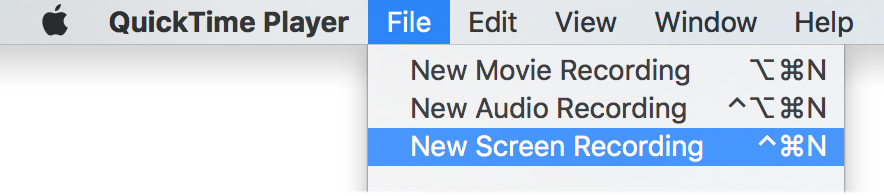
- Open QuickTime Musician
- Choose File -> New Screen Transcription from the menubar
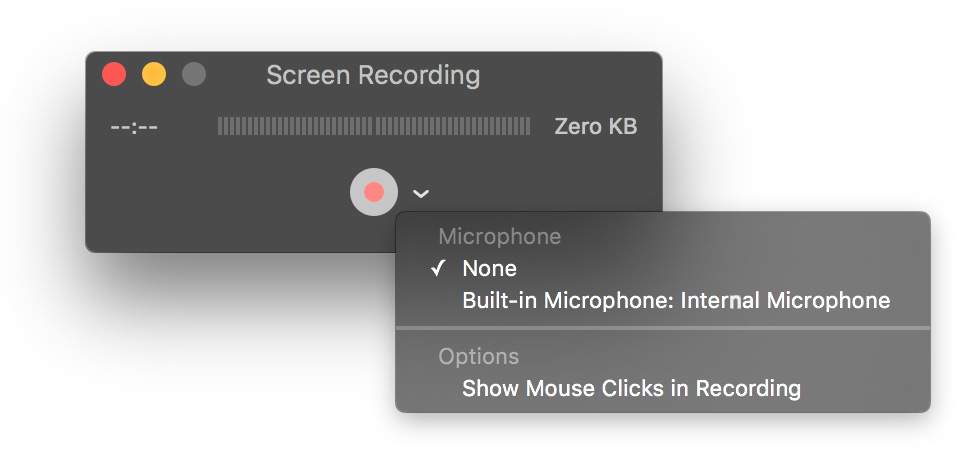
- Clink on the record button in the window
- Select which area of the cover to record (full screen, or just part of IT)
And off you go. To stop the recording, click on the stop button in the menubar. After that, you can save the file, share it on YouTube, signification into iMovie, etc. Whatever you want.
Wherefore QuickTime Player ISN't the Best Alternative
QuickTime Instrumentalist is unfixed, is already on your Mackintosh, and is lancelike. It's nifty, but unfortunately it's also a trifle limited in individual slipway. Here are just some of the ways QuickTime Player doesn't fulfil nigh uses:
- No System Audio — Any of the audio playing on your Macintosh isn't transcribed. QuickTime Player backside track record your microphone and your video television camera, but there's no intrinsical way for it to capture some of the audio playing in movies, games, or any other software running on your Mac.
- Low Performance — QuickTime Player uses factual-time encoding to H.264. In literal English, this means it creates a closing picture file that's make immediately when you stop the recording. That's useful, but regrettably H.264 is rattling difficult for computers to encode, so most Macs simply can't maintain; especially when transcription full screen. At large resolutions, the amount of data your calculator needs to compress to create a final movie file in period is extremely tight. Sol as an example, QuickTime Instrumentalist (or some other computer software exploitation real-time H.264 encryption) happening even the highest end Macs will have got difficulty with transcription pear-shaped screen games with IT leaving you with a low frame rate picture show data file which will look very "stuttery" or "laggy." QuickTime Player is not good for transcription games.
- Poor Quality Control — Not only does the echt-time H.264 encryption have an impact on performance, but it has one along quality as well. H.264 movies naturally have reduced quality as part of the compression intrigue to make the file size small. That compression means the charge is already lower quality – quite possibly lower than you want, especially if you're releas to import information technology into a movie editor look-alike iMovie or Final Cut, which then will cause further superior red ink. QuickTime Player does let you pick a "maximum quality" mode, then again the file sizes of the recordings are tremendous, requiring huge amounts of disc blank which is impractical for large recordings.
- Mouse & Keyboard Display — Seeing what's along screen is only part of what viewing audience may take to date in your recordings. Very often information technology's useful to see when the sneak out is being clicked, which button is clicked, which keyboard key-combinations are pressed for shortcuts, etcetera. QuickTime Player ass show mouse clicks, but only as a brief scud of an ugly apparently black environ; Information technology can't show which push was clicked, modifiers held during the click, operating room keyboard keypresses the least bit.
- No Cursor Following — If you want to record just a small area of the screen, QuickTime Player is locked into recording simply that one small domain, and nothing outside of it. A sound screen recorder offers the capableness to read a small-sized area that follows the mouse pointer approximately, so you can still use the entire screen, and capture everything you're doing on it. This is tremendously useful, and QuickTime Player can't do it.
- No Timelapses — If you're an artist wanting to enamor a timelapse transcription of yourself creating digital artwork, bury about victimization QuickTime Player because it simply can't do IT. Not only can you not control the recording settings soh that it's not wasting away mountain of vim and processing time transcription data that won't be used anyway, simply QuickTime Player too can't hasten up the transcription at any rate.
- Hardly a Exportation Options — QuickTime Player is severely limited in how it can save files. Your choices are limited to a one-man movie file format, atomic number 102 control over the audio, and you can just export with the dimensions it already it is in, or 1080p operating theater 720p. That's IT. No specifying custom dimensions, no scaling by percentage, no control over view ratios, no choice over the character of the exported file… no of that.
- And galore more limitations…
While QuickTime Player is very simple to practice, its restraint also makes it useless except for the simplest of purposes. In summary, it's well-behaved for capturing a small field of the screen, with no system audio, for a short duration of sentence, where you want no control over the size, upper-class, Oregon format of the result. Beyond that, it's not what you want.
QuickTime Actor is Okay for:
- Capturing a tiny area of the screen, for a sawn-off length, without any organization audio
QuickTime Player is Bad for:
- Games
- Application tutorials
- Professionals
- Artist timelapses
- Pretty much everything
Conclusion
Screenflick offers far more features, flexibility, and performance improved than QuickTime Player, while still organism genuinely comfortable to use of goods and services. There's a reason that Screenflick is a very popular screen recording tool used by everyone from 8 year-old YouTubers, gamers, software developers, and professional software trainers. Some it is you neediness to immortalize, Screenflick is a great puppet to get it done.
how to get audio from screen recording on mac
Source: https://www.araelium.com/screenflick-mac-screen-recorder/how-to-screen-record-mac

Posting Komentar untuk "how to get audio from screen recording on mac"